
GmVet is based on a full-web architecture accessible via a browser, with no local installation required. Authentication is done through the portal vet1.gmvet.net, protected by reCAPTCHA and a centralized identity management layer. The quality of the daily session depends on several technical parameters: user role management, persistence of multi-tab sessions, and behavior on tablets during consultations.
Integration of Sign.vet and MyPacs imaging: transforming GmVet into a clinical dashboard
A veterinary management software only becomes a true management tool when it stops being a data entry silo. Integrations are the main lever for optimization, far more than any keyboard shortcut or screen customization.
The interface with Sign.vet, updated in March 2026, allows for electronic signing of prescriptions and documents directly from the patient record. The collection of informed consent goes through the same channel, eliminating the need for paper printing and return scanning. For a clinic handling several dozen consultations per day, the cumulative time savings on administrative flow is significant.
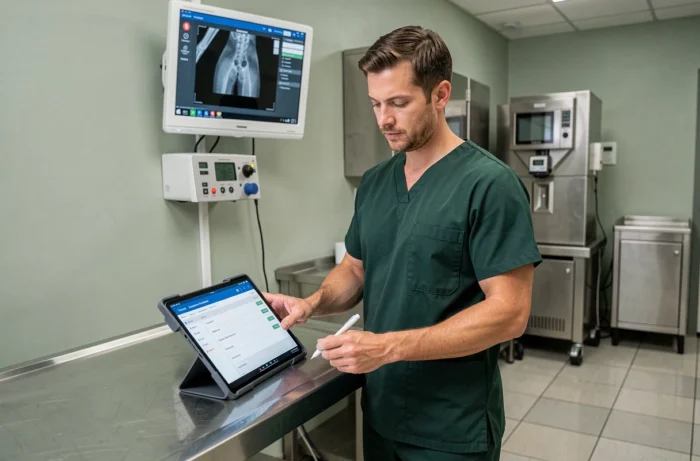
On the imaging side, dedicated documentation for the GmVet-MyPacs integration was published in 2025. The principle relies on a API key entered in the GmVet settings, which then allows for creating an imaging request from the patient file and retrieving the link to the examination without leaving the software environment.
We recommend testing this integration on a dedicated workstation before deploying it across the entire structure, as the retrieval of the link depends on network latency and local proxy configuration.
To connect to GMVET 1 for veterinarians and take advantage of these modules, one must first ensure that user rights allow access to integration functions, a point often overlooked during initial setup.
Stock management in GmVet: the module that clinics underutilize
Stock management remains the neglected aspect of daily GmVet usage. Univet has even offered a specific training session titled “GmVet – Stocks,” indicating that the need for skill enhancement in this area is real.
The stock module is not limited to inventory. It allows linking each billed act to a stock exit, identifying slow-moving products, and triggering restocking alerts. In practice, we observe that many structures enter the stock entries but do not set up restocking thresholds, which amounts to using a glorified spreadsheet.
Configuration points to check to utilize the stock module
- Associate each product reference with a supplier and packaging so that purchase orders are generated automatically from GmVet
- Define an alert threshold by category (vaccines, NSAIDs, antibiotics) rather than a single threshold, as rotations differ radically by therapeutic family
- Activate traceability by batch number for medications subject to reporting, simplifying batch recalls and regulatory checks
A properly configured stock in GmVet transforms the supplier order into a semi-automated process. The time freed up for the veterinary assistant or logistics manager adds up to hours each week.
Multi-site connection and user management in GmVet
GmVet natively operates in a multi-site and multi-user environment, with shared client and patient files between establishments. No local network infrastructure is required: an internet connection is sufficient, regardless of the OS (Mac, PC, Linux), as everything runs through the browser.
Adding an additional site can be configured in just a few minutes from the administration interface. The integration of new profiles (temporary staff, veterinary assistants, long-term sick leave) goes through a role system that determines access to modules. We recommend creating a specific profile for temporary staff with limited access to patient records and billing, without rights to general settings or performance indicators.
Session security and best authentication practices
The login portal vet1.gmvet.net uses a username and password, with reCAPTCHA protection. Each user must have their own identifier, including veterinary assistants. Sharing an account among multiple team members hinders traceability of actions and skews individual indicators.
Backups and updates are managed server-side in real-time, without clinic intervention. This SaaS model eliminates the risk of data loss due to a local disk failure, but it assumes a reliable internet connection. For structures in rural areas with limited bandwidth, having a backup connection (4G/5G) prevents interruptions during consultations.

Performance indicators and client communication in GmVet
GmVet integrates performance indicators aimed at optimizing the profitability of the structure. These dashboards aggregate billing, attendance, and average basket data by type of act. Cross-referencing these indicators with stock data allows for identifying profitable acts that are poorly stocked.
Client communication goes through a direct connection with the Webveto website. Vaccination reminders, appointment confirmations, and post-operative follow-ups can be automated from GmVet. The fine management of discounts and pricing complements the system: applying a differentiated rate based on the type of client (breeder, individual, shelter) without manual re-entry.
- Customize document templates (prescriptions, reports, invoices) to reflect the clinic’s visual identity and regulatory mentions
- Configure automatic reminders via SMS or email through the Webveto integration to reduce the rate of missed appointments
- Utilize average basket indicators by veterinarian to identify practice discrepancies within the team
The support model of GmVet relies on field technical delegates, specialized telephone assistance, and developers involved in functional evolution. This continuous support differentiates GmVet from a simple software publisher: clinical feedback directly informs the product roadmap.
A veterinary software properly integrated with electronic signatures, imaging, stock management, and client communication covers the entire clinical and administrative flow. The initial setup of each module remains the longest step, but it is also the one that determines the reliability of the entire system on a daily basis.