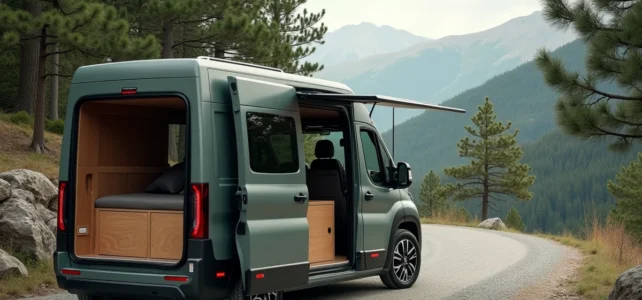
The Citroën Campster is based on the EMP2 platform of the SpaceTourer, but the layout designed by Pössl radically transforms the offering. We are not talking about a simple MPV with an added bed: the Campster is a vehicle whose pop-up roof structure, seat mounting rail, and auxiliary electrical circuit were designed from the outset to switch between a 7-seat configuration and a bivouac mode with four sleeping spaces.
Pop-up Roof and Structural Constraints of the Campster
The soft roof of the Campster lifts on hinges at the back, creating an upper sleeping space with a multi-layer insulating fabric. This technical choice imposes compromises that commercial presentations tend to downplay.
The closed roof height remains less than two meters, allowing access to underground parking and ferries without extra cost. With the roof open, the living space gains enough volume to allow standing in the central area, but the overall rigidity decreases compared to a fixed composite roof.
We observe on units that have traveled several tens of thousands of kilometers that the fabric of the pop-up roof remains the maintenance point to monitor. The waterproof seams and zippers are subject to UV exposure and thermal variations. An annual inspection of the fabric with water-repellent re-impregnation significantly extends its lifespan. This is an aspect that used car buyers often neglect, even though it directly affects livability in van mode.
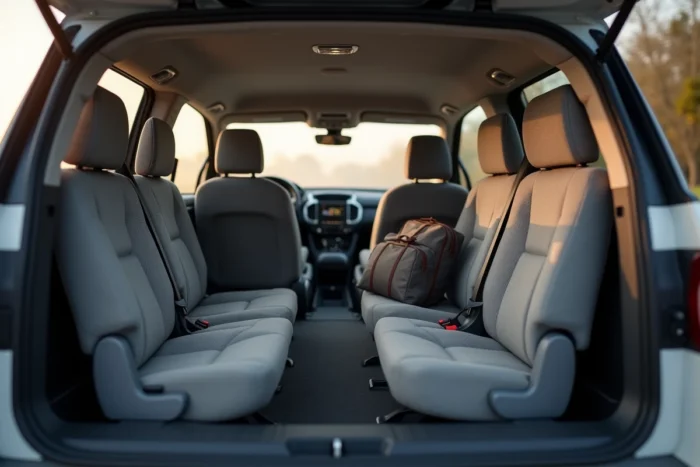
Regarding the modular Citroën Campster MPV, switching between the two configurations takes a few minutes thanks to the floor rails that accommodate individual seats or the foldable rear bench. The system works without tools but requires a bit of practice to securely lock the seats onto their ISOFIX anchor points.
Campster Facing GSR2 Obligations: What Changes for New Compact Vans
Since July 7, 2026, all M1 passenger vehicles registered for the first time in the European Union must be equipped with an expanded set of driver assistance systems mandated by GSR2 phase 3 regulations. No competing article on the Campster links this model to this regulatory deadline, even though it profoundly changes the offering of new compact vans.
The now mandatory equipment includes:
- Automatic emergency braking and lane-keeping assist, which require front sensors and a calibrated camera, increasing the production cost of the windshield and dashboard.
- Intelligent Speed Assist with sign recognition, rearview camera or sensors, and event data recorder (black box).
- A driver attention monitoring system via camera, issuing audible alerts in case of prolonged inattention, plus a predisposition for a breathalyzer ignition interlock.
For a vehicle like the Campster, based on the SpaceTourer, the integration of these systems directly depends on platform updates by Stellantis. The versions currently in circulation are not subject to retroactivity, but any future evolution of the model will need to include this equipment. We recommend that new buyers check the GSR2 compliance of the proposed model year, as a unit produced before the deadline can still be registered under the old standards.
This regulatory tightening also affects direct competitors (Volkswagen California, Vanster based on Jumpy) and will mechanically drive new prices up across the segment.
Pössl Layout and Campbox: Kitchen and Sleeping in Van Configuration
Pössl, the number one German converter in Europe in the compact van segment, offers two levels of equipment for the Campster. The standard version includes a fixed rear furniture unit with storage and a convertible bench into a bed. The Cult version adds textile finishes, LED ambient lighting, and blackout blinds on all side windows.
The Campbox is the central element of the kitchen layout. This removable unit includes a stove, a small sink with a water tank, and storage for dishes. Its removable nature allows for freeing up trunk space when the vehicle is used as an MPV on a daily basis.
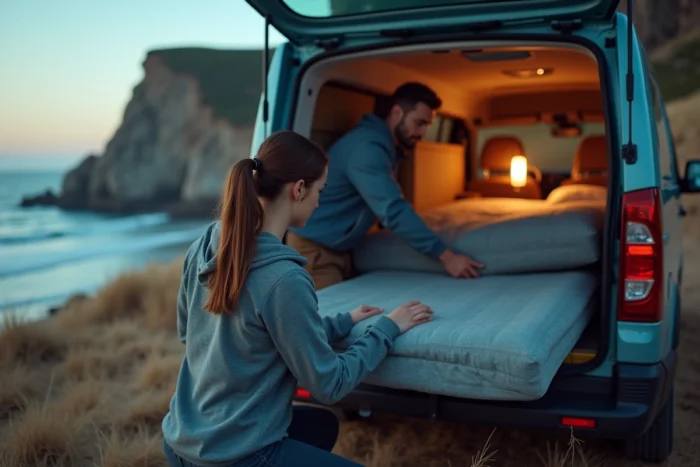
The lower bed, obtained by folding down the rear bench, provides a flat surface suitable for two adults. The upper sleeping area in the pop-up roof accommodates two additional people, bringing the total capacity to four sleeping spaces for a vehicle under five meters.
Points of Caution on Used Layouts
In the used market, we find that the most sought-after Campsters are those equipped with the complete Campbox and the blind package. Their depreciation remains moderate compared to a classic converted van, as demand exceeds supply in this compact segment.
The elements to inspect as a priority: the condition of the pop-up roof hinges, the operation of the auxiliary electrical circuit (12V socket, LED lighting), and the wear of the seat mounting rails. Excessive play on the rails indicates intensive use with frequent disassemblies and may compromise passenger safety.
Citroën Campster and Engines: Diesel Remains the Dominant Choice
The Campster inherits the diesel engines from the SpaceTourer. The majority of the fleet runs with the turbo diesel engine with a manual gearbox, which offers a good compromise between highway consumption and sufficient torque for towing. The EAT8 automatic gearbox is available as an option on certain trims and provides appreciated comfort in daily urban driving.
The absence of hybrid or electric powertrains on the Campster places it in a delicate position against the increasing constraints of low emission zones (LEZ). For exclusively urban use, this limitation will weigh more and more. However, for mixed use with long road trips and bivouacs, diesel retains an autonomy advantage that electric does not yet compensate for in this vehicle size.
The segment of converted compact vans is evolving under the dual regulatory pressure of GSR2 standards and low emission vehicle quotas. The Campster, in its current form, remains a well-rounded proposition for those seeking a versatile vehicle for daily use and capable of going on a getaway without a trailer or motorhome. Its main asset lies in this real modularity between family MPV and leisure van, provided one accepts the specific maintenance constraints of the pop-up roof and removable layout.