
Tansy (Tanacetum vulgare) is a perennial from the Asteraceae family that spreads through creeping rhizomes and seeds. Multiplying this plant in the garden relies on three main techniques: clump division, sowing, and recovering rooted fragments. Each method meets a different need depending on the available plant material and the gardener’s schedule.
Creeping rhizomes of tansy: understanding the mechanism before dividing
Tansy produces a network of underground rhizomes that extend horizontally beneath the soil surface. These underground stems bear buds capable of generating new aerial shoots, which explains the plant’s invasive reputation.
To multiply effectively, one must first observe this root system. A plant established for two or three years already presents a dense clump with several visible rhizome starts when the soil is cleared around it. Each fragment of rhizome bearing at least one bud can give rise to a new plant, provided it is replanted quickly in fresh soil.
This rhizome-based growth distinguishes tansy from many perennials that multiply solely by sowing or cuttings. Finding practical advice on Les Défricheurs helps to complement this approach with calendar markers suited to each region.
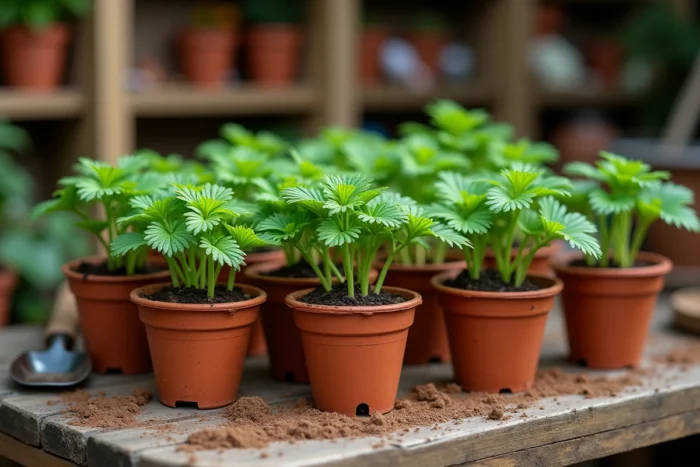
Clump division of tansy: the most reliable method in the garden
Division remains the preferred technique for obtaining plants identical to the mother plant, already acclimatized to the garden soil. It is practiced in spring (March-April) or autumn (September-October), when the plant is not in full bloom.
Harvesting and separating the clumps
Dig up the entire clump with a fork, keeping a ball of soil around the roots. Then separate the clumps by hand or with a sharp knife. A viable clump has healthy roots and at least two or three stems.
Remove the central portions of the clump if they appear woody or bare. The younger peripheral parts recover better.
Replanting without delay
Place each clump in a hole slightly wider than the root ball, in well-drained soil and full sun. Firm the soil and water generously. Recovery is quick: within a few weeks, new shoots appear.
- Space the plants 40 to 50 cm apart to allow the rhizomes room to establish without competing with neighboring crops
- Consider an anti-rhizome barrier (buried plate or pot without a bottom) if tansy is planted at the edge of a vegetable garden, as it colonizes the surrounding area in one or two seasons
- Water regularly for the first two weeks, then let the plant establish: it tolerates drought well once rooted
Dividing every three to four years rejuvenates the clump and limits uncontrolled expansion. This regular operation also provides new plants to distribute or reposition in the garden.
Sowing tansy seeds: when and how to proceed
Sowing is suitable for starting a tansy crop without having a mother plant, or for genetically renewing an established population. Tansy produces a large quantity of fine seeds at the end of summer, harvested from the dry flower heads.
Harvesting and storing seeds
Cut the inflorescences when they turn brown, usually in September. Hang them upside down in a dry, ventilated place. The seeds detach easily from the flower heads once completely dry. Store them in a paper envelope, protected from moisture, until the following spring.
Sowing in trays or directly in the ground
Sowing in trays under cover is done in March-April. Use a fine seed compost, place the seeds on the surface without covering them (they need light to germinate), then keep the substrate moist by misting. Germination usually takes two to three weeks.
Direct sowing in the ground is possible from May, when the soil is warmed. Prepare a fine seedbed, sow in spaced rows, and thin after germination to keep only one plant every 40 cm or so.
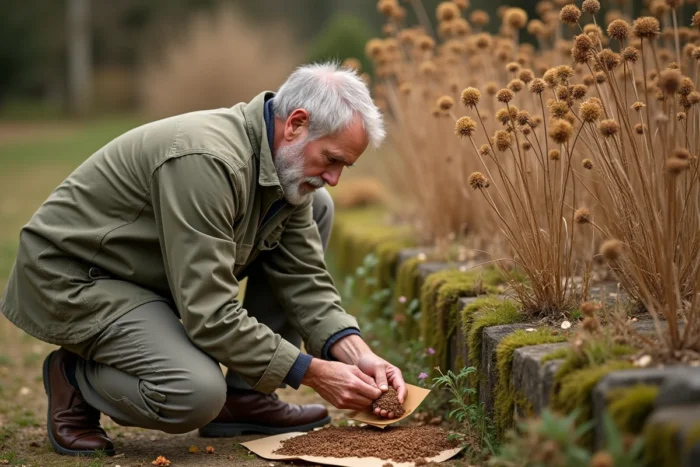
Transplanting young plants from trays is done when they have four to six true leaves. Choose a sunny location, in well-drained soil. A sowing of tansy usually does not flower until the second year, which requires more patience than division.
Soil, exposure, and care after multiplying tansy
Regardless of the chosen method, the planting conditions determine the success of the recovery. Tansy adapts to various soils, but certain parameters accelerate its establishment.
It prefers clay soils rich in humus, while tolerating lighter soils as long as they are not permanently waterlogged. Full sun remains the optimal exposure, although partial shade is tolerated with less abundant flowering.
After multiplication, a light mulch at the base of the new plants retains moisture and limits competition from weeds during the rooting phase. No fertilizer is needed in the first year: tansy is frugal, and overly rich soil encourages excessive vegetative growth at the expense of aromatic compound production.
- Remove faded inflorescences before seed dispersal if spontaneous reseeding is not desired
- Monitor the extension of rhizomes at the edge of the bed and cut back any runners that overflow from the designated area
- Cut back dry stems at the end of winter to encourage the emergence of vigorous new shoots in spring
Established tansy from division produces its first flowers as early as the following summer, while plants from sowing take an additional season. In both cases, the plant reaches its full vigor from the second or third year, forming a dense clump that can exceed one meter in height.
The characteristic camphor-like scent of its foliage intensifies with the maturity of the plant, making it an increasingly effective natural repellent in the vegetable garden over the seasons.