
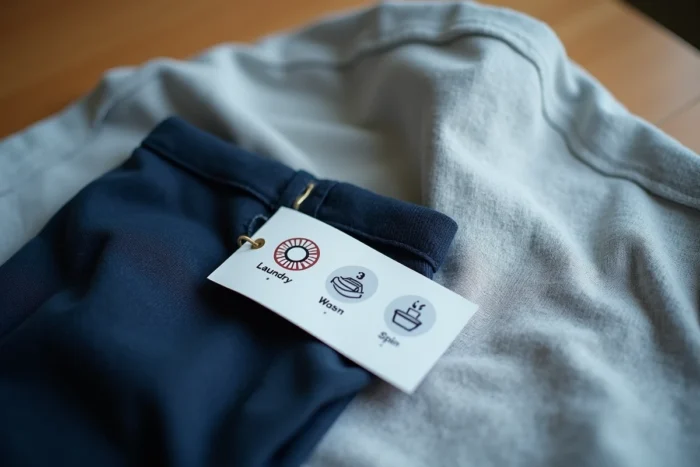
On the control panel of a Valberg washing machine, the spin icon takes the form of a stylized spiral. This symbol indicates the phase of the cycle where the drum spins at high speed to extract water from the laundry. Identifying this icon is one thing, but understanding what it actually implies for drying, energy consumption, and textile preservation is another.
Valberg machines, distributed by Electro Dépôt, display spin speeds that vary according to the models and programs. The spiral on the control panel does not provide all the necessary information to make an informed choice by itself.
Valberg Spin Speed: What the Icon Does Not Specify
The spiral logo indicates that the spin phase is active or selectable. It does not say anything about the actual speed reached by the drum during the cycle. On recent Valberg washing machines, the displayed speed is a theoretical maximum speed, not a guaranteed value for every wash.
When the laundry is unevenly distributed in the drum, the machine automatically reduces the spin speed to limit vibrations and prevent mechanical wear. A program set to 1,200 or 1,400 revolutions per minute may therefore run significantly below that if the imbalance sensor detects an issue.
Another point to note: on certain cycles like “delicate” or “wool,” the machine caps the spin at a reduced speed, even if the user manually selects a higher value. The spiral icon remains the same regardless of the program, which can be misleading. To better interpret the Valberg spin symbol, it is necessary to cross-reference the icon with the chosen program and consult the specific manual for the model.
Impact of Spinning on the Actual Cost of Drying
The choice of spin speed is not only about the duration of the washing cycle. It directly determines the amount of residual water in the laundry when it comes out of the drum, and thus the time and energy needed for drying, whether air-drying or in a dryer.
Air Drying
A high-speed spin removes more water. The laundry comes out lighter, dries faster on a drying rack, and reduces the time of exposure to humidity in a home. In winter or in a poorly ventilated apartment, insufficient spinning can extend drying by several hours and promote condensation on windows, even leading to mold growth.
Drying in a Tumble Dryer
The equation is more straightforward. The wetter the laundry going into the dryer, the longer and more energy-consuming the drying cycle will be. A high spin reduces the dryer’s energy consumption significantly. The difference between a spin at 800 revolutions and a spin at 1,200 or 1,400 revolutions is reflected in the electricity bill, especially for households that use the dryer several times a week.
The overall cost reasoning therefore goes beyond just the washing cycle. A quick program with low spinning may seem economical, but it shifts the energy cost to the drying phase.
Valberg Functions That Modify Spinning Without Using the Spiral
Several options available on Valberg washing machines affect the result of spinning without the spiral icon being directly involved. The “Easy Iron” function is the most common. It reduces the spin speed or adds an anti-wrinkle phase at the end of the cycle, leaving the laundry more humid but less wrinkled.
For the user, the visible result is laundry that comes out of the drum with fewer creases, but which requires a longer drying time. The “Easy Iron” function increases the residual humidity level compared to a standard maximum speed spin.
Field feedback varies on the actual usefulness of this option. For clothes that will then go into the dryer, the extra humidity partially negates the time savings in ironing. For laundry air-dried and then ironed, the compromise may be justified for shirts or sheets.
- “Easy Iron”: reduces spinning or adds an anti-wrinkle phase, laundry comes out more humid but less creased
- “Delicate” and “Wool” programs: automatically cap the speed, even if a high value is manually selected
- Imbalance detection: the imbalance sensor lowers the speed in case of poor distribution of laundry in the drum
Adapting Valberg Spin Speed to Textile Type
Consistently setting the spin to maximum is not the right approach. Some textiles do not handle high speeds well. Fine synthetic fibers, wool, and delicate garments may deform or felt under the centrifugal force.
Conversely, thick cotton (towels, sheets, jeans) tolerates high-speed spinning very well and benefits directly in drying. The right setting depends on the textile, not the displayed icon.
- Thick cotton and towels: maximum available speed, significantly shorter drying time
- Synthetics and blends: intermediate speed, a good compromise between fast drying and fiber preservation
- Wool and delicate textiles: low speed or dedicated cycle, the machine limits rotation anyway
- Technical garments (sports, waterproof): check the textile label, some coatings do not handle intense spinning well

The Valberg manual associated with each model specifies the speed limits by program. The available data does not allow for a universal rule applicable to the entire range, as the limits vary from one Valberg model to another. Consulting the manual for the exact model remains the only reliable method.
The spiral icon on a Valberg washing machine indicates the spin function, but the actual speed depends on the program, drum balancing, and activated options. Choosing the speed based on the washed textile and the intended drying method after the cycle allows for better control of both laundry quality and energy consumption throughout the process.