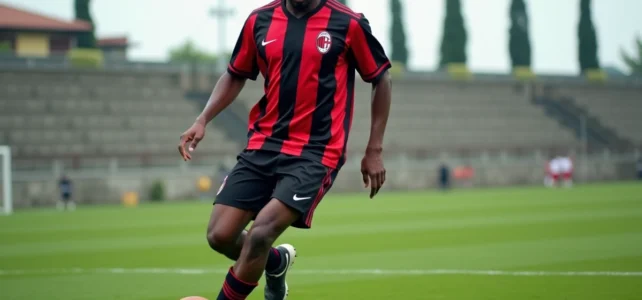
Measuring a player’s influence on a sport goes beyond their record. Ruud Gullit traversed European football in the 1980s and 1990s by changing the perception of the attacking midfielder position, the role of black players in team leadership, and more recently, the terms of the debate on the spectacle of football. This article compares the dimensions of this influence, from the pitch to the media stands.
Gullit’s Tactical Versatility: An Unmatched Profile in His Time
Media competitors focus on Gullit’s recent statements against modern football. Before addressing that, it is essential to examine what made his play so difficult to categorize for opposing coaches.
Gullit combined qualities rarely found in one body: aerial power, short dribbling technique, the ability to play with his back to goal, and long passing vision. At AC Milan, Arrigo Sacchi used him both as a forward and in support or on the wing, sometimes within the same match. This positional versatility preceded the concept of the hybrid player that European football generalized long after.
An article detailing Gullit’s rise in European football shows how his transition from Feyenoord to PSV Eindhoven, then to Milan, built this adaptability step by step, with each club entrusting him with a different role.
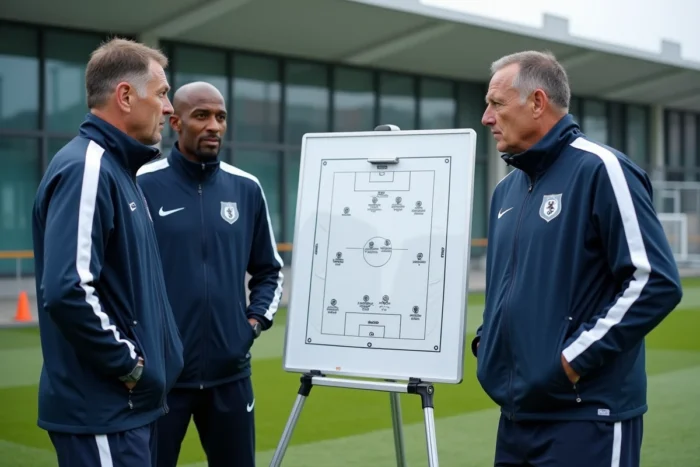
First Black Captain to Win the European Championship: An Ongoing Legacy on Racism Issues
In 1988, Gullit wore the armband for the Netherlands during their victory at the Euro. He remains the first black captain to win a European Championship. This fact, often reduced to a biographical line, still weighs heavily in current debates.
In 2026, Gullit publicly took a stand against racism targeting players of the Dutch national team. He denounces digital platforms that allow racist anonymity to thrive and calls on supporters to take more responsibility. His voice carries particular weight because it comes from a former captain who has himself faced these challenges.
This continuity between his historical role and his contemporary statements distinguishes Gullit from most former players who comment on football. He does not merely criticize the game; he challenges the structures.
Comparison Between Gullit’s Struggles and Current Diversity Issues
| Dimension | 1980s-1990s | Recent Period (2026) |
|---|---|---|
| Racism in Stadiums | Frequent monkey chants, almost no disciplinary sanctions | Existing federal sanctions, but proliferation online |
| Gullit’s Role | Captain on the field, symbolic by his mere presence | Public speaking, direct questioning of platforms |
| Institutional Response | Minimal, statements of principle | UEFA anti-discrimination protocols, but uneven enforcement |
| Media Visibility of the Issue | Local coverage, little international echo | Immediate amplification through social media |
The table highlights a gap: institutional tools now exist, but racism has migrated from the stands to the screens, making the words of a historical witness like Gullit all the more relevant.
Critique of Hydration Breaks and Managerial Football
Gullit’s critique of modern football is not limited to vague nostalgia. It targets specific mechanisms. In 2026, he condemned hydration breaks in international competitions, arguing that they destroy the natural rhythm of the game.
His argument goes beyond spectator comfort. Gullit believes these interruptions are exploited by coaches as a tactical tool to reset a match, give instructions, and break the opposing team’s momentum. The issue he points out is one of a football where management supplants spontaneous play.
What Gullit Criticizes About Current Football, Point by Point
- Hydration breaks used as tactical timeouts, to the detriment of spectacle and momentum
- An excess of defensive management that reduces space and stifles offensive creativity
- The gradual disappearance of dribbling and individual risk-taking in favor of rigid collective patterns
These criticisms resonate because they come from a player whose style embodied exactly the opposite: risk-taking, improvisation, and physical dominance in service of spectacle. When Gullit states that football has become “absolutely horrible,” he speaks from a field experience that lends weight to the analysis.
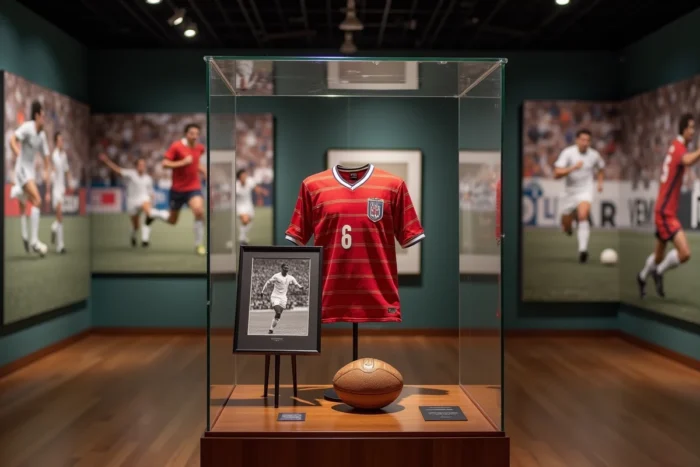
Gullit as Consultant and Coach: An Influence Transmitted Beyond the Pitch
After his playing career, Gullit was one of the first former internationals to hold a manager-coach position in the Premier League, at Chelsea. This stint, even brief, opened a path for prominent former players who wanted to transition to the bench without going through the lower divisions.
His role as a TV consultant, first in the UK and then in the Netherlands, also contributed to normalizing an analytical voice carried by former players not of European descent. Gullit established the idea that a Ballon d’Or could become a respected commentator whose opinions shape debates, not just a guest on a panel.
Gullit’s trajectory reminds us that transforming football cannot be measured solely by trophies. His ability to remain relevant, whether on racial issues or the quality of spectacle, lies in a coherence between what he did on the pitch and what he says off it. Players who leave a lasting mark on a sport are those whose public positions extend their play, not those who merely recall their statistics.