
Le Bon Coin attracts around 14.9 million unique monthly visitors to its real estate section and has more than 1.1 million listings at any given time. Simply posting an ad is no longer enough: the platform has tightened its listing conditions since 2024, buyers are better informed, and competition among private sellers requires thorough preparation from the first publication.
Opposable DPE and technical file: what really blocks sales on Le Bon Coin
Since the reform that came into effect in 2025, the DPE has become legally opposable. A buyer can now hold the seller liable if the actual energy performance of the property deviates significantly from what is stated in the ad. This change radically alters the way private sales are prepared.
We observe that many sellers publish their ad even before receiving their diagnosis. On Le Bon Coin, the DPE label is displayed directly in the search results. An ad without a DPE or with a class F or G generates fewer qualified contacts, as buyers filter by energy performance.
The technical diagnostics file (DDT) is not limited to the DPE. Depending on the location and age of the property, one must anticipate asbestos, lead, the condition of gas and electricity installations, termites, non-collective sanitation, and the state of risks and pollution. Each missing diagnosis at the time of signing the preliminary agreement can delay the sale by several weeks.
We recommend having the entire DDT completed before going online. The cost is the same whether you order the diagnostics in advance or in an emergency, but the credibility of your ad changes dramatically.
Before publishing, it is useful to understand how to sell your house on Le Bon Coin properly, especially to anticipate the legal obligations related to the technical file.
Quota of free ads and paid options: the pricing model to know
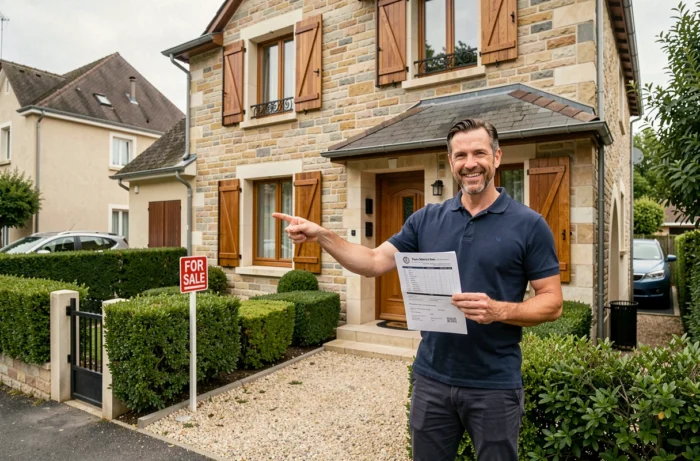
Le Bon Coin ended unlimited free listings for individuals in 2024. A annual quota of free listings now applies, by type of property (sale, rental, offices/commercial). Beyond this quota, each listing becomes paid, with rates varying according to the duration of publication and the chosen highlighting options.
This change has a direct consequence: publishing a poorly prepared ad, deleting it, and then republishing consumes your quota for nothing. It is better to invest time in the quality of the first publication than to waste free slots.
Paid visibility options (top listing, premium frame, geolocated highlighting) significantly increase the number of views. Their relevance depends on the local market:
- In tight areas (large cities), competition among listings often justifies a highlighting option during the first days of publication
- In rural or suburban areas, the volume of competing listings is lower, and natural positioning may suffice
- For atypical properties (loft, farmhouse, buildable land), targeted highlighting reaches buyers who are broadening their geographical search
Each option has a fixed cost, not a percentage of the sale price. The return on investment is therefore proportionally more interesting for high-priced properties.
Writing the real estate ad and photos: the important trade-offs
About 66% of real estate project holders consult Le Bon Coin each month, and 9.3 million French people use it exclusively for their search. This volume means that your ad will be compared instantly to dozens of others in the same sector.
The title is the first filter. Buyers scan the results in a few seconds. A title that includes the type of property, the living area, and the precise location (neighborhood or municipality, not just the postal code) attracts more clicks than a generic title.
The description should mention technical elements before subjective arguments. Carrez surface, number of rooms, year of construction, type of heating, amount of property tax, DPE class: this information allows the buyer to qualify the property without having to contact you for basic questions.
Regarding photos, we recommend a minimum of ten shots in natural light, taken at chest height with a moderately wide-angle lens. Smartphone photos can be sufficient if the lighting is controlled. However, excessive filters and HDR create a disconnect between the image and the physical visit, generating distrust.

Estimating the sale price: method and common mistakes
Setting a price too high on Le Bon Coin produces a measurable effect: the ad stagnates, loses visibility in the sorting algorithm, and eventually requires a price drop visible in the ad’s history. Savvy buyers spot these drops and deduce an additional negotiation margin.
The most reliable method involves cross-referencing three sources:
- The DVF data, accessible for free, which lists the actual sale prices recorded in your municipality
- The prices per square meter displayed on active competing ads in the same sector on Le Bon Coin
- An estimate by a real estate professional, free at most agencies, which incorporates the specifics of the property (exposure, floor, recent renovations)
The displayed price should include your negotiation margin from the start. In practice, buyers on Le Bon Coin almost always negotiate. Displaying a price slightly above your minimum sale threshold leaves room without discouraging initial contacts.
A properly estimated property, documented by a complete DDT and presented with quality photos receives its first visit requests within days of publication. If no serious contact occurs after two weeks, the problem almost always lies with the price or the perceived quality of the ad.