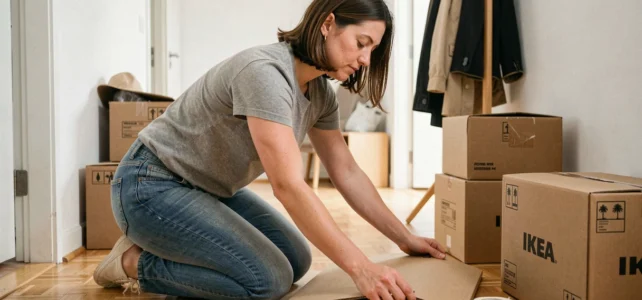
After a large purchase at Ikea or a move, boxes quickly pile up in the entrance, hallway, or balcony. The question of sorting and disposal varies depending on whether you have a vehicle, access to a recycling center, or simply a bit of time. This article compares the disposal methods available in France for these packages, based on their condition and the logistical constraints of each individual.
Clean or damaged boxes: what changes for recycling
Not all Ikea boxes follow the same circuit. The determining factor is their condition at the time of sorting.
Greasy, soiled, or wet boxes are excluded from recycling in most French sorting guidelines. A box stained with food, wet from rain, or soaked with protective oil must go with the residual household waste, not in the yellow bin.
On the other hand, a dry and clean box, even slightly wrinkled, remains perfectly recyclable. Ikea packaging is generally made of single or double-walled corrugated cardboard, making it compatible with the traditional paper-cardboard recycling stream. Before choosing a disposal method, simply sort into two piles: reusable or recyclable boxes on one side, those that are good for the trash on the other.
For those looking to quickly get rid of their Ikea moving boxes, this preliminary sorting step prevents contaminating an entire batch of recyclables with a single soiled box.
Comparison of disposal solutions based on your situation
The choice of method depends on the volume of boxes, access to a vehicle, and the services offered by the municipality. The table below summarizes the main options.
| Solution | Suitable Volume | Vehicle Required | Average Delay | Main Constraint |
|---|---|---|---|---|
| Yellow bin (folded/cut) | Small (a few boxes) | No | Immediate | Limited bin size |
| Municipal recycling center | Large volume | Yes | According to hours | Access card sometimes required |
| Bulky waste collection by appointment | Medium to large | No | Variable (a few days to a few weeks) | Availability depending on municipality |
| Donation between individuals (local groups) | Any volume | No if picked up on site | Quick if local demand | Finding a taker |
| Drop-off at store (Ikea parking) | Small to medium | Yes | Immediate | Reserved for unpacked packaging on site |
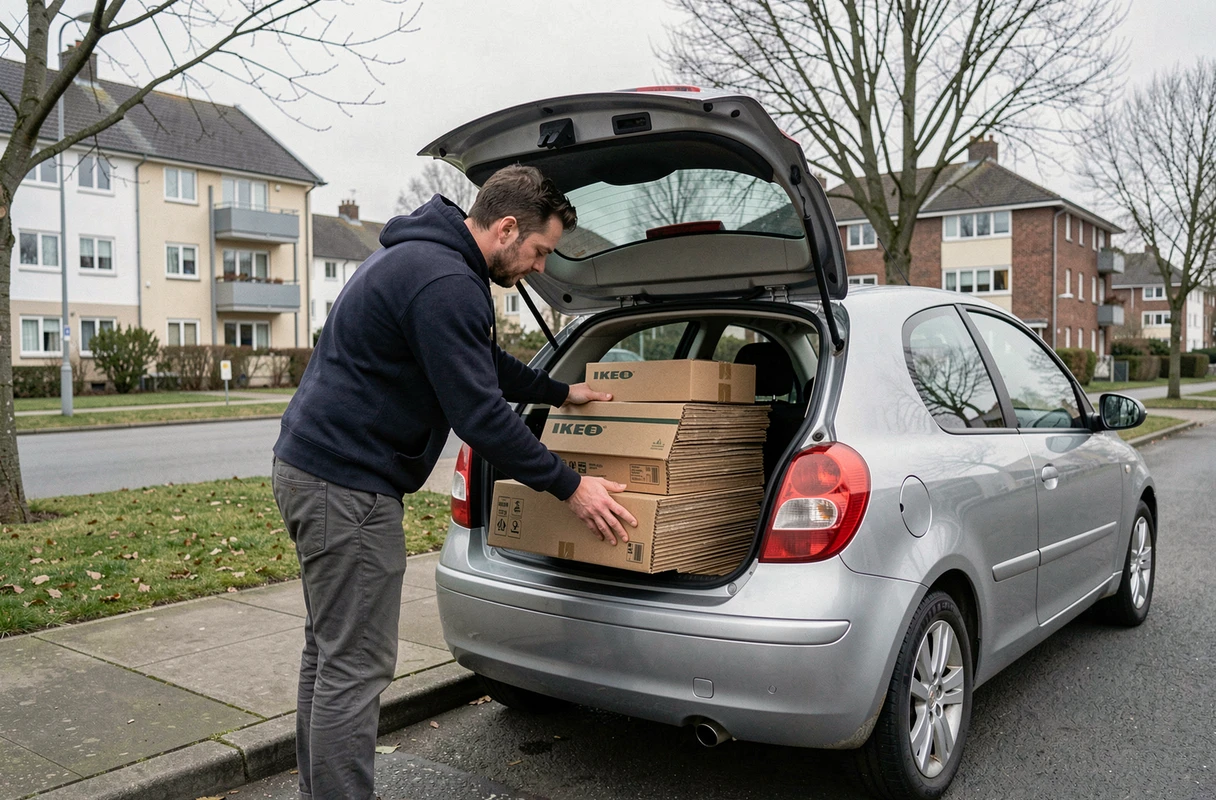
The yellow bin easily absorbs a few flattened boxes. Beyond that, it overflows, and waste collectors do not pick up boxes placed next to it on the public road.
The recycling center remains the most direct solution for a large volume, but it requires a car trip and sometimes an access card to request in advance. Conversely, bulky waste collection by appointment allows you to leave boxes in front of your home without a vehicle, provided you anticipate the delay.
Without a car or recycling center: local options to activate
The most common situation after a move in the city: dozens of boxes stacked in a studio, no car, and a recycling center accessible only on the outskirts. Three concrete options work in this case.
Municipal bulky waste collection
The majority of French municipalities offer a home collection service for bulky waste, with a simple call or via the town hall’s website. Moving boxes fall into this category when their volume exceeds the capacity of the sorting bin. The delay varies by municipality, from a few days to several weeks during peak demand (particularly June to September).
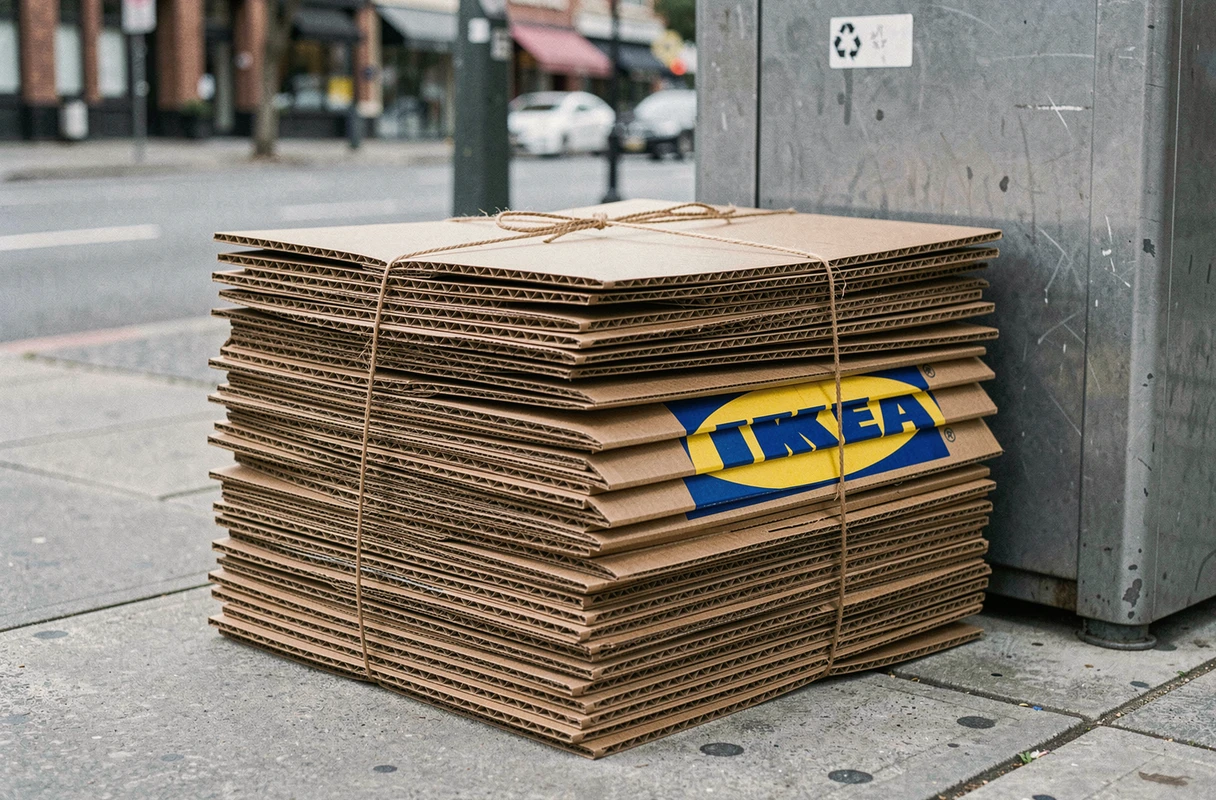
To speed up the process, it is helpful to fold and tie the boxes into compact bundles before the agents come. Some cities also have voluntary drop-off points dedicated to paper-cardboard, often closer than a recycling center.
Local donation groups
People preparing for their own move are actively looking for free boxes. Neighborhood mutual aid groups, local forums, and platforms for donations between individuals allow you to find a taker within a few hours in densely populated urban areas.
- Post an ad with the number of boxes, their approximate dimensions, and the pickup address
- Prefer quick pickup by specifying that the boxes are available immediately
- Gather the boxes in an accessible location (lobby, trash room, sidewalk on pickup day)
This solution has a double advantage: quick disposal without transport and direct reuse of the cardboard, which avoids going through the recycling stream.
Drop-off at retailers
Some local businesses (grocery stores, convenience stores, bookstores) accept clean boxes for their own use or to integrate into their professional collection. The process remains informal: you need to ask the manager directly.
Reuse of Ikea boxes: when storage makes sense
Keeping your boxes is not always a bad idea, provided you only keep those in good condition and store them properly.
Large Ikea boxes can be used for a future move, to ship bulky items, or to protect furniture during renovations. A flattened box takes up very little space in a closet or under a bed.
- Remove all adhesives and staples before folding to facilitate future assembly
- Store in a dry place: a box that gets damp loses its rigidity and becomes unusable
- Limit storage to a maximum of ten boxes to avoid accumulation
Small boxes, on the other hand, are well-suited for garage or basement storage. They allow for organizing seasonal items (decorations, off-season clothing) without investing in plastic bins.
The choice between throwing away, donating, or storing ultimately depends on a simple calculation: does the next use justify the space occupied for several months? If the answer is no, donation or municipal collection options remain the quickest ways to free up your home without taking the car.