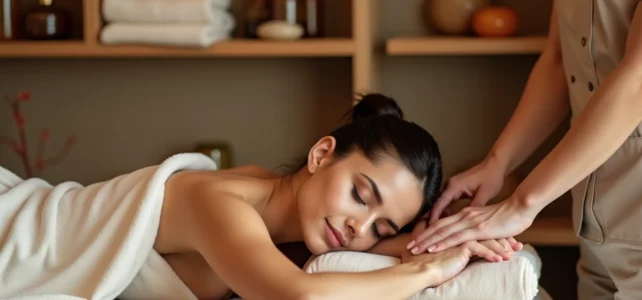
Reflexology is based on a precise postulate: the manual stimulation of skin areas located at the extremities (feet, hands, face) would activate physiological responses at a distance, via nerve endings and the network of meridians. The benefits most documented by recent methodological reviews are deep relaxation, reduced perceived anxiety, and improved perceived sleep. These effects are mainly attributed to touch, rest, and the positive expectation of the recipient.
Foot Reflexology and Neurovegetative Response: What the Protocol Changes
A classic foot massage already provides notable relaxation. What differentiates reflexology is the targeted pressure, maintained for several seconds on specific points of the arch, heel, or toes. This specific pressure engages deep mechanoreceptors and triggers a measurable parasympathetic response: slowing of the heart rate, relaxation of the diaphragm, and reduction of overall muscle tension.
The practitioner adjusts the intensity based on the reactivity of each area. A sensitive area to palpation directs the work towards a potential functional imbalance, without claiming to diagnose a pathology. We recommend clearly distinguishing between preventive reflexology, focused on maintaining energetic balance, and curative reflexology, which accompanies an already established disorder (chronic insomnia, recurrent cervical tension, post-burnout stress).
Reflexology is increasingly integrated into an emotional support framework: grief, professional burnout, life transitions. This psychocorporeal dimension goes beyond simple comfort care and justifies regular sessions rather than an isolated service.
To explore this approach in a dedicated professional setting, EdaySpa salon and its reflexology offers protocols tailored to each profile, whether for occasional sessions or follow-ups over several weeks.
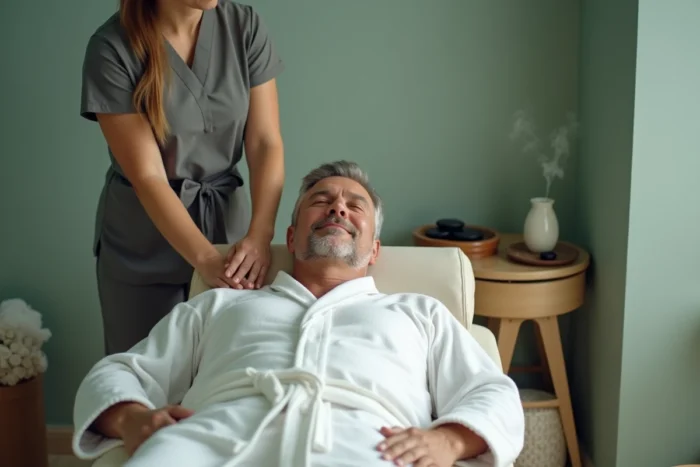
Massage Techniques in Salons: Choosing According to Physiological Objectives
A specialized salon like EdaySpa does not just offer a menu of massages. The choice of technique depends on the desired objective, and confusing relaxation with deep muscle work leads to disappointing results.
Swedish Massage and Muscle Tension Drainage
Swedish massage combines long strokes, kneading, and friction to improve blood circulation and venous return. It targets superficial and medium muscles, ideal after physical exertion or a week of sedentary work. The stroking maneuvers prepare the tissues before deeper pressures.
Hot Stone Massage and Fascial Release
The heat transmitted by basalt stones acts on the fascia, the connective membranes that envelop each muscle. The fascial release obtained then allows for more precise manual work on tension knots. This technique is particularly suitable for people whose muscles react with a reflex contraction as soon as direct pressure is applied.
Facial Reflexology and Facial Treatments
Less known than foot reflexology, facial reflexology stimulates points located on the forehead, temples, and jawline. It acts on the accumulated tensions in the cranio-cervical area, common in people suffering from bruxism or tension headaches.
To guide the choice, here are the criteria to consider before a session:
- Nature of the tension: superficial (general fatigue, heavy legs) or deep (established contractures, chronic pain). Swedish massage is sufficient for the former, while myofascial work is preferable for the latter.
- Sensitivity to touch: hyper-reactive individuals benefit more from hot stones or reflexology, which allow for a gradual increase in intensity.
- Emotional or physical objective: a reflexology session focused on relaxation does not mobilize the same areas as a sports massage. Clarifying the intention with the practitioner avoids disappointments.
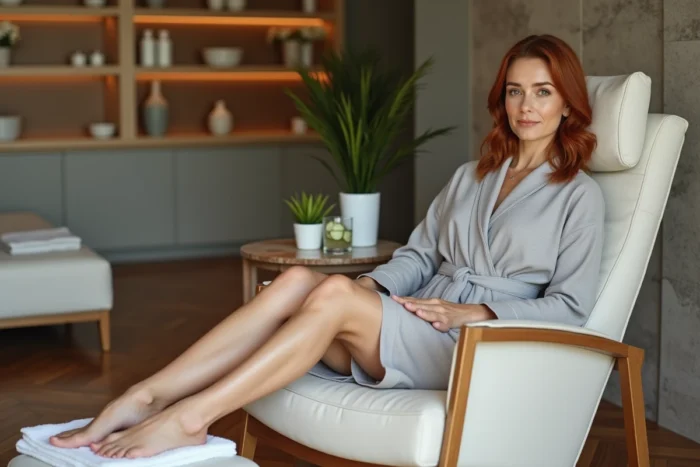
Frequency of Sessions and Cumulative Effects on Stress
An isolated session of massage or reflexology produces an immediate effect on relaxation. The question that rarely arises in popular articles is the dose-response curve: at what frequency do the benefits become lasting?
We observe that spacing sessions two to three weeks apart helps maintain a muscle tension level lower than baseline. Beyond a month without treatment, the body generally returns to its initial state, especially in profiles subjected to constant professional stress.
Reflexology has a specific advantage in this context: it can be practiced in shorter sessions than full body massage, making it easier to integrate into a busy schedule. A targeted foot reflexology session requires less time for undressing and reinstallation than a full massage.
Combining both approaches in the same care pathway, alternating body massage and reflexology, maximizes the effects on stress management and sleep quality. This complementarity is precisely what distinguishes a multidisciplinary salon from a physiotherapy office or a leisure-oriented hotel spa.
Reflexology and Massages: The Limitations to Know
No solid evidence shows that stimulating specific points on the foot directly affects a given organ or hormone. Recent critical analyses attribute the benefits of reflexology to the touch itself, rest, and the positive expectation of the recipient. This does not diminish the interest in the practice, but it does require situating it within its real scope.
Several situations warrant caution:
- Phlebitis or acute circulatory disorders: any manipulation of the feet and calves is contraindicated without prior medical advice.
- Pregnancy in the first trimester: certain points of foot reflexology are reputed to stimulate the uterine sphere, although evidence remains limited.
- Skin lesions, fungal infections, or recent fractures: direct work on the affected area should be postponed.
- Disproportionate therapeutic expectations: reflexology accompanies, it neither replaces medical treatment nor structured psychological follow-up.
A competent practitioner systematically asks these questions before the first session. The absence of a prior assessment is a warning sign regarding the quality of the establishment, regardless of the proposed setting.