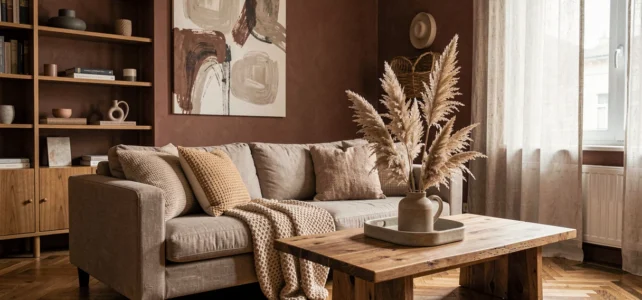
A modern cocoon refers to an interior where every element (material, light, furniture) contributes to a feeling of comfort without visual clutter. The principle is based on a balance between sensory warmth and simplicity of lines. Transforming your home into a modern cocoon does not involve adding decorative objects, but rather making structural choices regarding materials, volumes, and light sources.
Organic furniture and rounded shapes: structure before decoration
The current trend favors organic and sculptural furniture with curved lines. Low sofas, rounded armchairs, tables with softened edges: these pieces structure the space and create an enveloping atmosphere without the need to multiply accessories.
The principle is to choose one or two strong pieces of furniture per room rather than dispersing attention. A rounded sofa placed in the center of the living room defines the volume of the living area better than a classic arrangement against the walls. This approach frees up circulation and gives the impression of a more generous space, even in a modest room.
The resources available at https://maisonmania.fr/ allow you to explore different furniture configurations suited to this logic of strong pieces that organize the living area.
Favoring low seating also changes the perception of ceiling heights. The gaze naturally rises, amplifying the feeling of volume. A low, curved piece of furniture advantageously replaces three small aligned pieces: less visual clutter, more coherence in the room.
Natural materials and biophilic design for a sensory interior
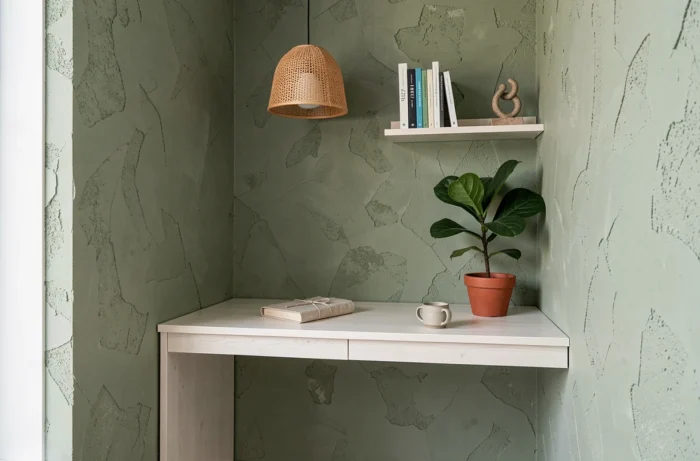
Biophilic design involves integrating natural elements into the habitat to promote well-being. Concretely, this translates into the choice of raw materials (solid wood, stone, linen, rattan, artisanal ceramics) and the presence of living plants.
The return of natural and sensory materials marks a clear break from the cold minimalism that dominated interiors in recent years. The difference lies in the texture: a solid oak table top, an exposed stone wall, or washed linen cushions introduce a tactile dimension that lacquered or laminated surfaces do not provide.
To avoid the “nature showroom” effect, a few guidelines are helpful:
- Limit identical finishes in the same room. Combining light wood and dark ceramics, or rattan and linen, creates a contrast of materials without overload.
- Incorporate plants of varying sizes. A large ficus next to a small succulent on a shelf creates a better visual rhythm than five identical pots lined up.
- Reserve smooth materials (glass, brushed metal) for small functional objects so that textured materials visually dominate.
A cocoon interior relies on the contrast of textures, not their accumulation. Three well-chosen materials are enough to give depth to an entire room.
Scenographic lighting: creating atmospheres by zone and moment
Lighting is the most underestimated lever for transforming an interior into a cocoon. Current recommendations go far beyond simple “warm lighting”: they emphasize scenographic lighting, which means multiplying light sources at different heights.
The principle is to assign a lighting function to each area of the room. A reading lamp near the armchair, an indirect floor lamp behind the sofa, adjustable spotlights above the kitchen work surface. Each source illuminates a specific activity and can be turned on or off independently.
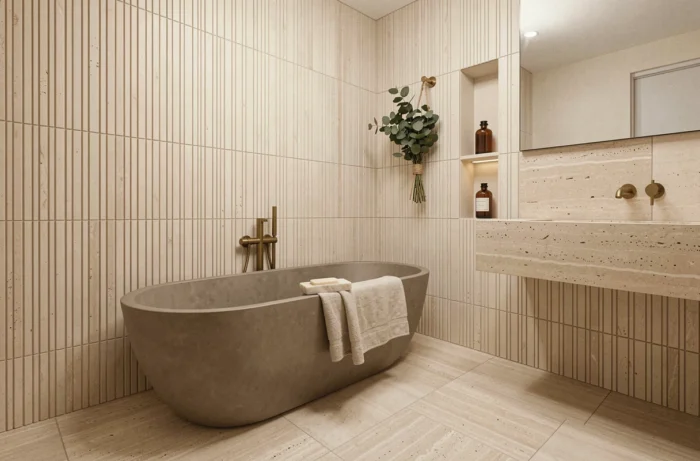
Dimmers radically change the atmosphere of a room depending on the time of day. A strong intensity in the morning for active tasks, reduced in the evening to signal the body’s transition to rest. Three light sources at different heights replace a single ceiling fixture and transform any living room or bedroom into a cocooning space.
A common pitfall is choosing all sources in the same color temperature. Varying slightly, for example, a neutral light in the work area and a warm light in the relaxation area, enhances the functional distinction between spaces without the need for partitions.
Progressive transformation: test by zone before finalizing a style
Recent approaches recommend a logic of progressive transformation rather than a complete makeover all at once. The principle is to intervene in a limited area (a corner of the living room, the headboard, the kitchen counter), live with the change for a few weeks, then adjust before moving on to the next area.
This method has a concrete advantage: it allows time to assess whether a choice of material or color truly works in daily life. A wall color that seems perfect in a sample can become overwhelming after ten days. A repositioned piece of furniture may obstruct circulation once habits are resumed.
- Start with the room where you spend the most time, often the living room or bedroom.
- Change the lighting and textiles first before touching the furniture, as these are the least expensive and most reversible changes.
- Wait at least two weeks before judging the effect of a change on the overall ambiance of the room.
This step-by-step approach also avoids budgetary mistakes. Replacing a ceiling fixture with two table lamps costs less than buying a sofa that ultimately does not fit the space.
A modern cocoon is not established over a weekend. The most refined interiors result from successive adjustments, guided by the actual use of each room rather than a fixed trend. The last criterion to keep in mind remains tactile coherence: if the hand finds the same quality of material everywhere, the eye will naturally follow.