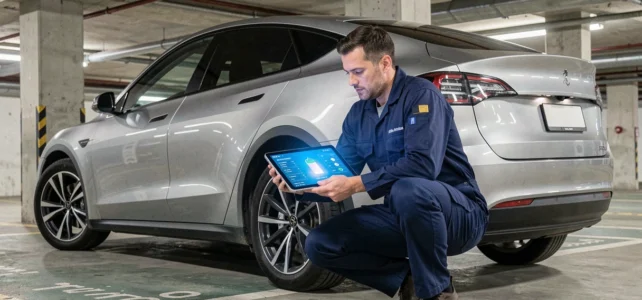
Choosing a reliable electric car is not just about comparing ranges or list prices. Reliability depends on less visible factors: mechanical architecture, battery quality over time, actual breakdown frequency. Recent rankings, particularly the one from OCU published in August 2026, reshuffle the cards among manufacturers and challenge some preconceived notions.
Batteries and real degradation: what field data reveals
You may have heard that an electric car battery loses a significant portion of its capacity after a few years? Field reports tell a different story.
Analyses covering several thousand electric vehicles show that battery degradation is much slower than expected. The majority of models retain a very significant portion of their initial capacity after five years of daily use. In practical terms, a driver covering usual distances will not notice a marked decrease in their range during this period.
This resilience is explained by the chemistry of the cells (next-generation lithium-ion) and the onboard thermal management systems. A vehicle with a properly cooled battery ages better than a model lacking this feature, even if its displayed range is superior on paper.
To compare models from this perspective, consulting the electric car reliability ranking allows you to identify vehicles that deliver on their promises over time.
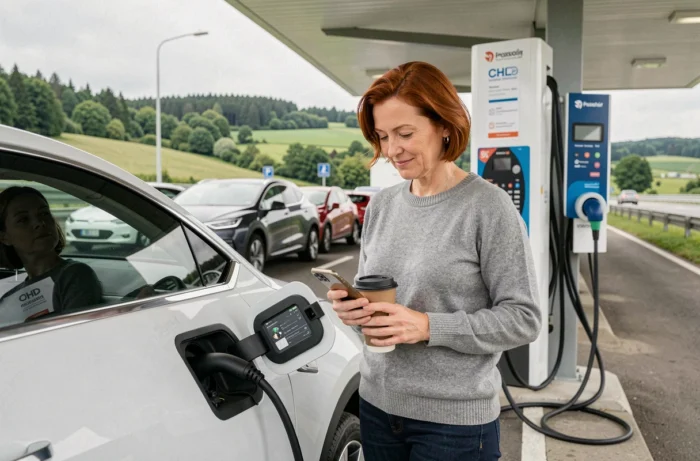
OCU 2026 ranking: BMW and Smart ahead of Tesla in reliability
The OCU survey, published in August 2026, is based on feedback from 3,810 owners across 10 European countries. Its significance lies in measuring the reliability perceived by users, not just laboratory performance.
Top brands in the reliability ranking
BMW and Smart achieve the highest perceived reliability score, with 91 out of 100. This result is surprising, as these two brands are not typically associated with electric vehicles.
Just behind, Tesla, BYD, and Dacia reach 89 out of 100. Tesla stands out more in overall satisfaction and cost savings, but is not number one in raw reliability.
Why this gap between image and actual reliability?
Tesla benefits from strong recognition related to range and software updates. However, the quality of finish and some recurring defects (cabin noise, body adjustments) weigh in the perceived reliability surveys. BMW, with its industrial experience in assembly, minimizes these inconveniences.
The OCU study also shows that, on average, the reliability of electric models is comparable to that of combustion vehicles. This finding contradicts the narrative that switching to electric would entail a higher risk of breakdowns.
Breakdowns in electric vehicles: components to watch
An electric motor has far fewer moving parts than a combustion engine. No clutch, no timing belt, no engine oil changes. This mechanical simplicity inherently reduces the frequency of breakdowns.
The points of concern lie elsewhere:
- The thermal management system of the battery: a malfunction can accelerate cell degradation and reduce range prematurely.
- The onboard electronics and sensors: recent vehicles integrate numerous control units. A faulty software update can trigger false alerts or unexpected behaviors.
- The brakes: regenerative braking puts less strain on the pads, but moisture and lack of use can cause corrosion on the discs, especially in exclusive urban use.
Recent technical inspections in Europe confirm this trend. Electric vehicles generally show fewer mechanical defects than combustion vehicles during inspections at equivalent ages.
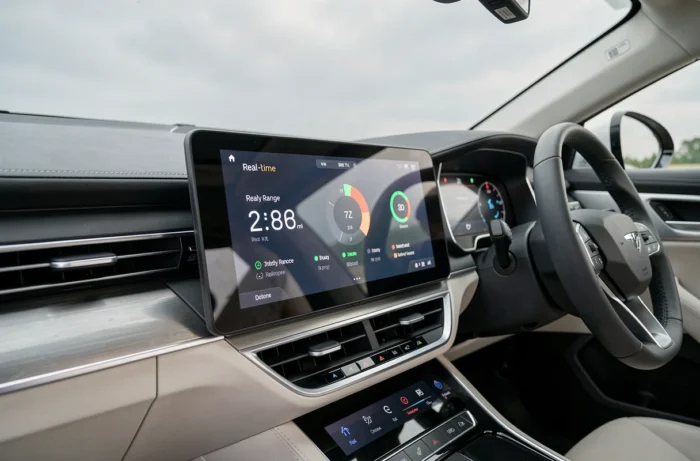
Used electric car reliability: the criteria that matter
Buying a used electric vehicle requires a different focus than that applied to a combustion model. Mileage alone is not enough to assess the vehicle’s condition.
Why this change in approach? Because the battery is the most expensive component. Its state of health (often referred to as SoH, for State of Health) determines the remaining range and, by extension, the vehicle’s value.
Before purchasing, it is useful to check:
- The battery diagnostic report, which indicates the residual capacity compared to the original capacity.
- The charging history: a vehicle regularly charged with fast current (high-power DC charging) may show slightly more wear than a model charged at home.
- The presence of an active thermal management system, which protects the cells during fast charging or in cold weather.
A used electric vehicle whose battery retains a high portion of its initial capacity remains a relevant purchase, sometimes much more economical than a new model with equivalent range.
Reliability and maintenance costs: the structural advantage of electric
The maintenance of an electric vehicle costs significantly less than that of a combustion vehicle. Fewer wear parts mean fewer trips to the workshop and lower bills.
No oil changes, no fuel filters, no belts to replace. The main expenses are limited to tires (which may wear out faster due to immediate torque), brake fluid, and cabin filters.
This structural saving enhances the overall reliability felt by owners. Fewer mechanical interventions also mean fewer opportunities to introduce a problem during repairs.
The electric car reliability ranking in 2024 is therefore not just a list of models. It reflects a deeper change: the simplified mechanics of electric vehicles, combined with batteries that are more durable than expected, place this powertrain on a reliability level at least equal to that of combustion vehicles. The choice of model remains crucial, but the risk of serious breakdown decreases as technology matures.