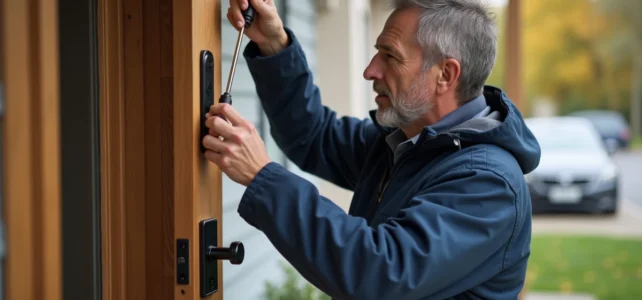
Protecting your home today involves a wide range of equipment: alarms, connected cameras, multi-point locks. However, home protection is not limited to anti-intrusion measures. Home insurance contracts, the structural characteristics of the building, and the fine-tuning of guarantees play at least as significant a role, often underestimated by both homeowners and tenants.
Underinsurance and exclusions of coverage: the gap that the alarm does not fill
Installing an alarm provides an immediate sense of security. This feeling can mask a less reassuring reality: that of a poorly calibrated home insurance contract. Several recent guides focused on “mistakes to avoid” highlight that a property can be poorly covered despite having a contract, particularly due to exclusions, underinsurance, or a misinterpretation of the guarantees.
Underinsurance occurs when the declared value of the goods is lower than their actual value. In the event of a claim, compensation is then proportionally reduced, sometimes drastically. Deductibles, limits per category of items, and the distinction between replacement value and actual cash value significantly alter the reimbursed amount.
A homeowner who has invested in surveillance equipment but neglected to review their theft coverage limits risks disappointment at the time of the claim.
To delve into the specifics related to the house on Protect Habitation, it is useful to compare the guarantees of your contract with the actual characteristics of your home. The coherence between the building, the installed equipment, and the clauses of the contract constitutes the foundation of effective protection.
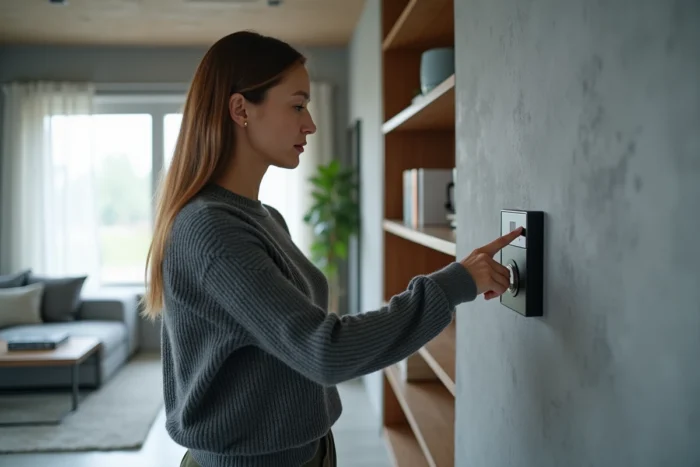
Old buildings and structural diagnosis: protecting your home beyond intrusion
Consumer articles on home security almost exclusively focus on burglaries, locks, and motion detectors. However, the structural security of the home itself deserves equal attention.
French regulations are evolving towards a logic of preventive protection of buildings. In 2025-2026, obligations for structural diagnosis for certain collective buildings located in areas defined by municipalities will appear, even in the absence of visible disorder. While this measure primarily concerns co-owned properties, it reflects a paradigm shift: the security of a home is no longer limited to preventing someone from entering; it includes the solidity of what surrounds you.
For a single-family home, the question arises differently. No mandatory technical control currently exists for houses. Field feedback varies on the relevance of a voluntary diagnosis, but several situations justify it:
- Progressive cracks on load-bearing walls or foundations, especially in clay areas prone to soil shrinkage-swelling
- Extension or elevation work carried out without prior structural study
- Acquisition of a house built before seismic standards in a concerned area
A weakened structure that is not diagnosed can also create insurance complications. If a claim occurs due to a pre-existing structural defect that was not declared, the insurer may invoke an exclusion. Protecting the home starts with knowing its actual condition.
Alarm and remote monitoring: what these devices really cover
The alarm remains the number one reflex when thinking about protecting your home, and this is legitimate. A system coupled with remote monitoring with verification (checking by a human operator before intervention) offers a real level of deterrence. Burglars prefer easy targets, and the visible presence of a device is often enough to deter them.
However, the quality of alarm handling varies greatly among providers. A system that generates unaddressed or delayed alerts loses much of its usefulness. The trend in 2026 pushes security professionals to optimize alarm response as a lever of reliability, which requires a rapid processing chain between detection, verification, and alerting law enforcement.
The equipment alone does not do everything. A poorly positioned detector, a camera aimed at an area with no foot traffic, an access code shared with too many people: these common mistakes reduce the effectiveness of the device without the occupant being aware of it.
Points of vigilance during installation
- Cover the access points actually used by burglars: doors, ground floor windows, sliding doors, connecting garage
- Check that the system works in case of a power outage or signal jamming
- Ensure that the remote monitoring contract specifies intervention times and verification procedures
- Do not neglect roller shutters and presence simulation during prolonged absences
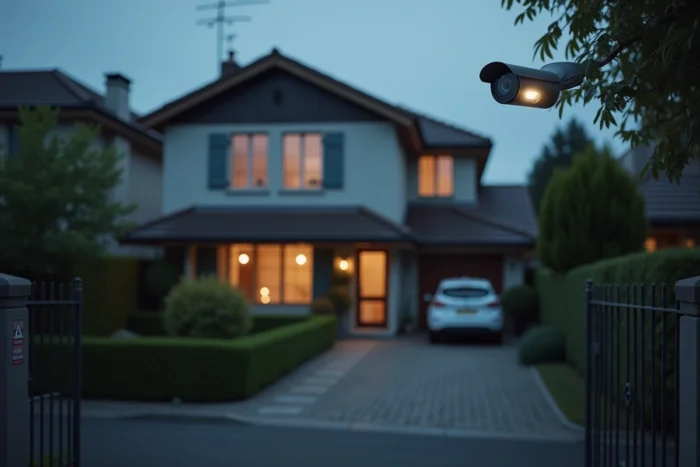
Physical reinforcement of access points: doors, windows, and shutters
The available data converge on one point: the majority of break-ins occur through the front door or windows. Physically reinforcing these access points remains the most directly effective measure, even before installing an electronic system.
A certified anti-burglary front door (A2P standard) with a multi-point lock and hinge protectors offers measurable resistance. Anti-burglary glazing on exposed windows, especially those located on the ground floor or accessible from a flat roof, complements the system. Roller shutters or hinged shutters with internal locks add an additional physical barrier, particularly deterrent at night or during vacations.
The cost of these reinforcements varies depending on the type of joinery and the level of certification sought. However, when compared to the impact of a burglary (material losses, restoration costs, psychological impact), investing in reinforcing the building often justifies itself better than a remote monitoring subscription alone.
The protection of a home relies on the interplay between three levels: the physical solidity of the building, the relevance of the detection system, and the coherence of the insurance contract with the reality of the home. A poorly calibrated contract, an undiagnosed building, or a poorly configured alarm system are enough to render the entire setup ineffective.