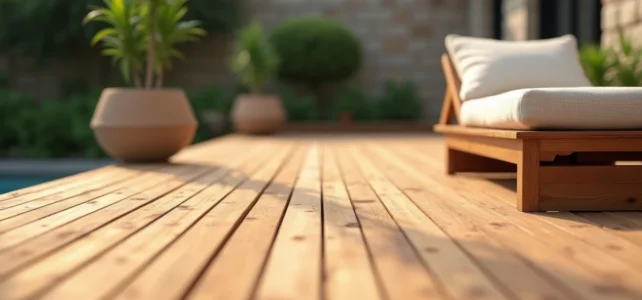
The choice of wood species for an outdoor terrace rarely hinges solely on aesthetics. The actual durability of a decking depends as much on what happens beneath the boards as on the species laid on top. Drainage, ventilation, quality of the joists: these technical parameters condition the longevity of the project, sometimes more than the price per square meter of the chosen board.
Supporting structure and ventilation: what makes a wooden terrace last
Most buying guides focus attention on the species. Job site feedback tells a different story: a terrace made of ipe laid on poorly drained soil, with unsuitable joists, deteriorates faster than treated pine installed on a properly ventilated structure.
The compaction of the soil, the spacing of the joists, and the airflow beneath the boards form the technical foundation of durable decking. Without sufficient ventilation underneath, the wood retains moisture and fungi settle in, regardless of the species’ durability class.
In practical terms, adjustable pedestals facilitate leveling while ensuring a crawl space. Controlling the spacing between boards (a few millimeters is sufficient) allows for rainwater drainage. To identify the best wood for outdoors, it’s essential first to check that the supporting structure is up to standard.
- Joists made of the same class or higher species as the boards, to prevent the support from degrading before the visible decking.
- Minimum slope directed away from the house, to prevent water stagnation at the base of the walls.
- Regular spacing between boards and stainless steel or treated steel fasteners, to limit corrosion and oxidation stains on the wood.
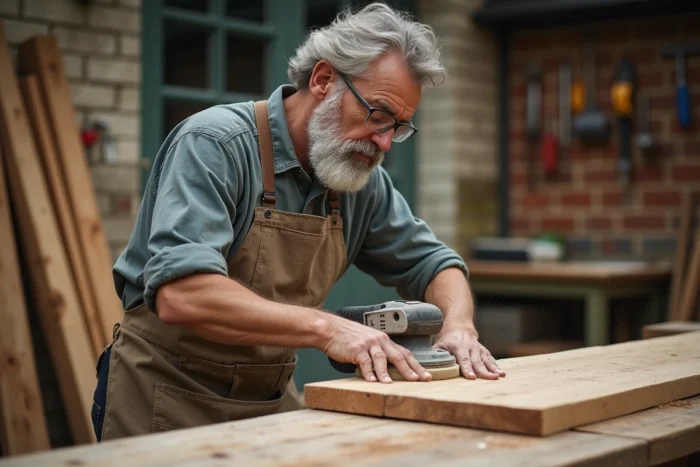
Douglas, larch, or treated pine: European wood versus exotic wood
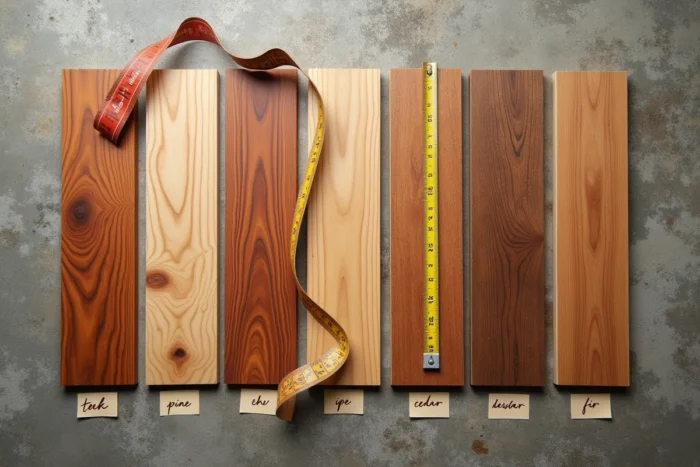
Douglas fir is gaining visibility in terrace projects. This European species offers a compromise between natural resistance, local availability, and moderate purchase price. Larch presents a comparable profile, with slightly higher density and a more golden hue.
These two conifers naturally fall into class 3, making them suitable for a well-ventilated outdoor terrace. However, for a terrace in constant contact with water (poolside, damp shaded area), only species in class 4 or 5 guarantee long-term durability.
Treated Scots pine artificially reaches class 4. Its price makes it accessible, but the chemical treatment raises questions for barefoot use, especially around pools. Field feedback varies on the actual longevity of the treatment: some professionals observe accelerated graying after a few seasons.
Ipé, cumaru, padouk: the price of density
Exotic woods (ipe, cumaru, padouk) boast high density and natural resistance to wood-eating insects and mold, without chemical treatment. Their durability in class 5 makes them suitable for the most exposed environments.
The downside: a significantly higher purchase cost than European species, a supply chain that raises questions about forest traceability, and a weight per board that complicates handling. PEFC or FSC certification remains the only reliable indicator of sustainable management for these imported species.
Without regular application of oil or saturator, all exotic woods gray under UV exposure. This graying does not affect mechanical resistance but radically changes the visual appearance. The choice between an accepted gray patina and annual maintenance depends as much on personal taste as on budget.
Total cost of a wooden terrace: purchase, maintenance, and replacement
Comparing species based solely on purchase price per square meter skews the calculation. The actual cost of a terrace includes annual maintenance and lifespan before replacement.
A treated pine, inexpensive to purchase, requires a brightener and a saturator approximately every two years. Over about fifteen years, the cumulative cost of maintenance products and labor significantly narrows the gap with an exotic species that can forgo treatment (at the cost of an accepted graying).
Untreated Douglas fir, laid on a proper structure, offers a middle ground: moderate maintenance, intermediate price, and easier partial replacement due to the local availability of boards. For a project with a constrained initial budget, this long-term cost logic often leads to well-laid European species rather than poorly structured exotic ones.
Composite wood for terraces: alternative or compromise
Composite (a mix of wood fibers and polymer resin) appeals with its promise of almost no maintenance. No saturator, no sanding, no graying. The boards retain their original color for years.
However, composite heats up significantly more than solid wood in direct sunlight. On a south-facing terrace, the surface can become uncomfortable for bare feet during the hottest hours. This parameter, rarely highlighted in product sheets, deserves to be tested before purchase.
Composite cannot be sanded or repaired locally: a damaged board must be completely replaced. And the colors, even high-quality ones, remain imitations. For those seeking the texture and smell of wood, composite does not replace the original. It solves a maintenance issue, not a desire for a living material.
Outdoor terrace and use class: the non-negotiable criterion
The use classification (from 1 to 5) defines a wood’s resistance to moisture and biological attacks. For an outdoor terrace, class 3 is the absolute minimum, with class 4 recommended for damp areas.
- Class 3: wood exposed to the elements without direct contact with the ground (ventilated terrace, cladding). Douglas, larch, red cedar.
- Class 4: wood in prolonged contact with water or soil. Treated autoclave pine, ipe, cumaru, padouk.
- Class 5: permanent immersion in saltwater. Port use, pontoons, pilings.
Using a class 2 species for an outdoor terrace amounts to ignoring the actual exposure conditions. Some sellers offer untreated fir or spruce at attractive prices for outdoor use: these woods will not last more than a few seasons without visible degradation.
The choice of a species for a terrace comes down to a trade-off between budget, accepted maintenance, and installation environment. The supporting structure, ventilation, and drainage determine the actual lifespan, well beyond what the technical sheet of an isolated board promises.