
Building a house in Switzerland takes on average 18 to 24 months, with two-thirds of that time spent before the first shovel hits the ground. The Swiss regulatory framework, which is more stringent than in most European countries, requires thorough preparation at each phase. Understanding the logic of these steps helps avoid the bottlenecks that turn a construction project into a source of frustration.
Legality of the plot: the preliminary check that no one anticipates
Since July 1, 2026, a change in the federal ordinance on spatial planning has changed the game for plots located outside building zones. Authorities must now verify, at least in a summary manner, the legality of all constructions and installations already present on the plot before issuing a new permit.
Specifically, if an old shed or an unauthorized extension exists on the desired land, the authorization may be conditioned on restoration measures or even demolition. It is no longer enough to demonstrate the feasibility of the new project; the legal history of the site must be audited.
This obligation also applies to renovation or expansion projects outside building zones. The revision of the federal law on spatial planning (LAT 2), gradually implemented, strictly regulates development in these areas while opening new margins for work related to energy renovation. Resources like bien-construire.ch allow you to check the specific requirements for each canton before committing a budget to a given plot.
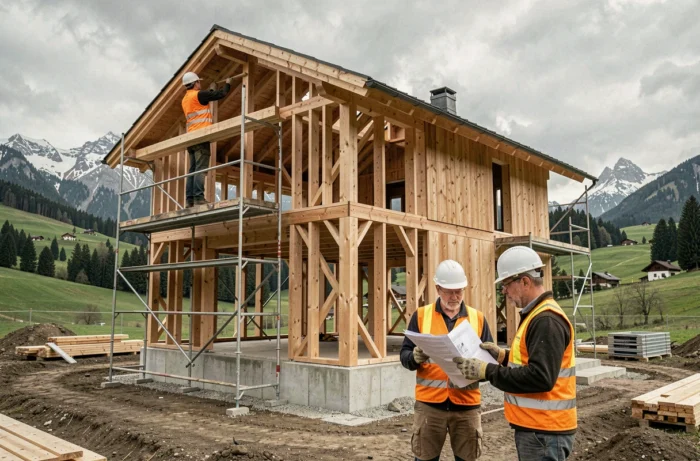
Site analysis and geotechnical study in Switzerland
The choice of land determines the budget well beyond the purchase price. A geotechnical analysis reveals the nature of the soil, the depth of the water table, and the foundation constraints. On clayey or sloped land, the additional costs for earthworks and special foundations can represent a significant portion of the total budget.
Three checks must precede any signature:
- The municipal zoning regulations (land use index, maximum height, distances to boundaries) condition the possible volume of the house.
- Access to utilities (water, electricity, sewage) may require costly connection work if the plot is isolated.
- Easements and rights of way recorded in the land registry sometimes limit the actual buildable area.
A cheaper plot on the outskirts may turn out to be more expensive than a serviced lot in a residential area once these additional costs are factored in. The land budget always includes study and connection fees.
Architectural design and building permit in Switzerland
The design phase is divided into two distinct stages. The preliminary project (APS) outlines the main lines: placement on the plot, volume, orientation. The definitive project (APD) specifies the plans, materials, and technical details necessary for the permit application.
The building permit in Switzerland follows a procedure that varies by canton, but the principle remains the same: the file is subjected to public inquiry for a duration set by cantonal law. Neighbors and any concerned parties can file objections. A project that complies with zoning regulations significantly reduces the risk of opposition but does not eliminate it.
Materials and construction choices
The choice of materials comes into play from the design stage and impacts both the budget and the timeline of the construction site. Wood construction continues to grow in Switzerland, driven by energy requirements and speed of implementation. A prefabricated wooden frame shortens the construction phase by several weeks compared to traditional masonry construction.
Swiss energy standards impose high insulation performance regardless of the material chosen. The additional cost associated with these requirements is offset in the medium term by reduced heating expenses.

Budget and financing for house construction
The budget for construction is not limited to the general contractor’s quote. Several items are often underestimated by project owners:
- Architect and engineer fees, calculated as a percentage of the cost of the work according to SIA standards.
- Connection fees and administrative fees related to the building permit.
- A contingency reserve, which industry professionals recommend planning from the outset to absorb unforeseen events on site.
A construction loan works differently from a traditional mortgage. The bank releases funds in installments as work progresses. Interest only accrues on the amounts actually disbursed. At the end of the construction, the construction loan is converted into a mortgage.
Financial institutions generally require a down payment of at least 20% of the project’s value. The second pillar (LPP) and the third pillar can be mobilized under certain conditions to supplement this contribution.
Site monitoring and acceptance of work
The construction phase concentrates the risks of exceeding deadlines and budgets. Regular monitoring, ideally carried out by the architect or an independent project manager, helps detect discrepancies before they become costly.
The acceptance of work marks the transfer of responsibility. Under Swiss law, defects identified at the time of acceptance must be documented in writing. Legal guarantees then cover hidden defects for a duration defined by the Code of Obligations. Neglecting this step exposes the owner to uncovered repair costs.
The first five years after delivery remain a period of vigilance: shrinkage cracks, waterproofing issues, or installation defects often manifest during this time. Keeping all site minutes and defect notices greatly facilitates recourse in case of disputes.
Building a house in Switzerland relies on a sequence where each phase conditions the next. The legal audit of the land, the rigor of the design, and the financial monitoring of the site are the three levers that separate a controlled project from one that goes off the rails. The last point to remember: since 2026, checking the legal history of the plot is no longer a precaution; it is a regulatory obligation.